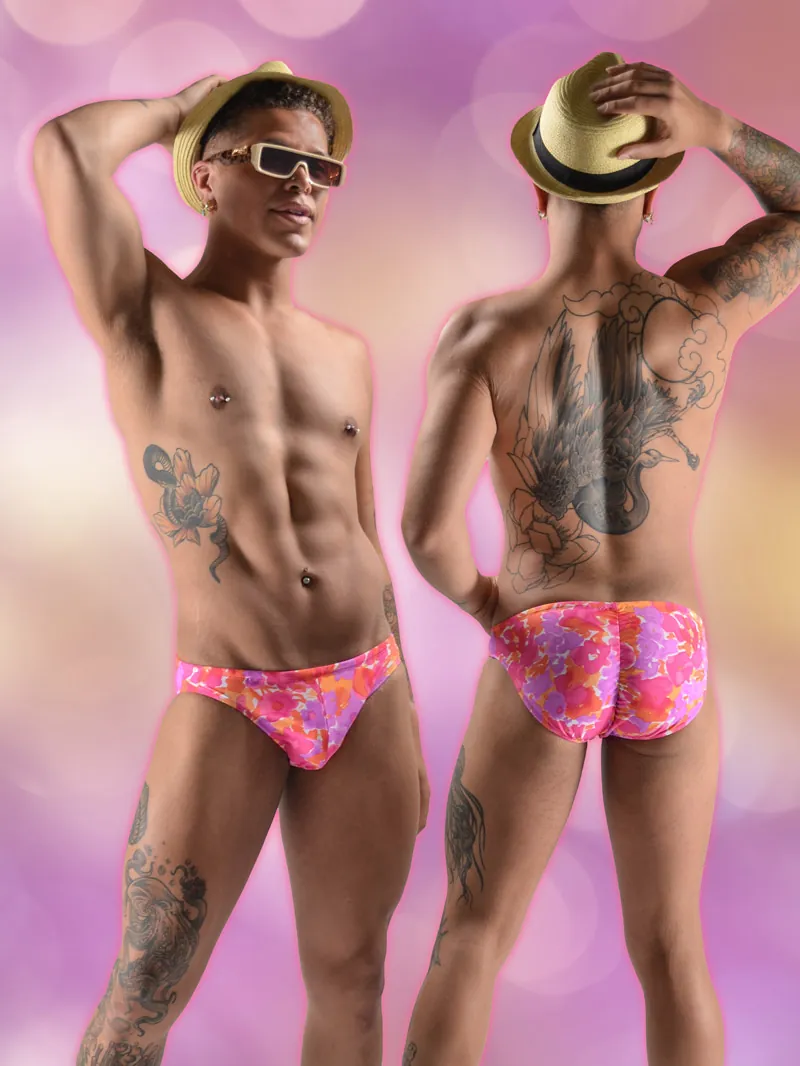
A swim brief is supposed to feel like the easy option. It should stay put when you dive in, dry without drama, and let the print do its thing. When the fit is off, though, a small piece of fabric gets loud fast. The waistband rolls, the legs grip, the front feels either too flat or too loose, and suddenly you are adjusting instead of enjoying the day.
The good news is that a great fit is not a mystery. It comes down to a few checkpoints you can judge before the water, plus a little honesty about how you like to wear a suit. This guide is for anyone trying swim briefs for the first time, returning after a long break, or figuring out why one pair feels better than another.
How Cecil and Ezra helps you get closer on the first try
Cecil and Ezra suits are individually made in a studio, not a factory, with patterns created for customers who want something more personal. A generous front pouch and a specialized elastic application create a fit that feels distinct in the marketplace. These suits are not made to look good on a hanger. They are made to look good on you.
The practical move is simple: start with the fit guide, then message Greg through Etsy when you are between sizes or want to talk through a detail. You are buying from the person making the suit, not an anonymous size chart.
Start with secure, not severe
A swim brief needs more hold than a pair of relaxed shorts. Water adds movement, and wet fabric has to keep its job. That does not mean the suit should feel like a test of character.
Put the brief on dry and let it settle where it wants to sit. Take a few normal movements: bend to pick something up, sit down, bring a knee up, and walk across the room. You are looking for a fit that stays in place without digging into your waist or cutting sharply at the top of your leg. A little tension is right. A constant urge to pull the waistband away from your body is not.
If you are used to loose board shorts, the close feel can take a minute to register as normal. Give the brief a few movements before deciding it is too snug. The better question is not, "Can I feel it?" It is, "Can I forget about it after a minute?"

Get the waistband in the right place
Most swim briefs look and feel best when the waistband sits at your natural underwear line. That is usually below the narrowest part of your torso, above the widest part of your hips. Starting there gives the front, seat, and leg openings their intended shape.
Try not to pull the waistband too high in an attempt to create more coverage. That can tug the front upward and make the leg openings feel tighter than they really are. Wearing it too low creates the opposite problem: the front may sag, the back can drift, and the suit needs more adjusting as you move.
Let the leg openings lie flat
Leg openings are where a nearly-right brief becomes a wrong one. They should sit against the body with a clean edge, without a deep groove or a floppy gap. When the elastic is doing too much, you will see a hard line and feel it immediately when you sit. When it is too loose, the opening can shift or flare once the fabric is wet.
Look at each side from the front and back. The line should be similar left to right, and the fabric should not bunch at the crease of the leg. Small differences in body shape are normal. You are not chasing perfect symmetry. You are checking that the suit is following your body rather than fighting it.
A cut with a higher leg can feel more open without being less secure. A lower cut can feel more familiar if you want a little more coverage. Both can fit well. What matters is whether the edge stays calm when you move.
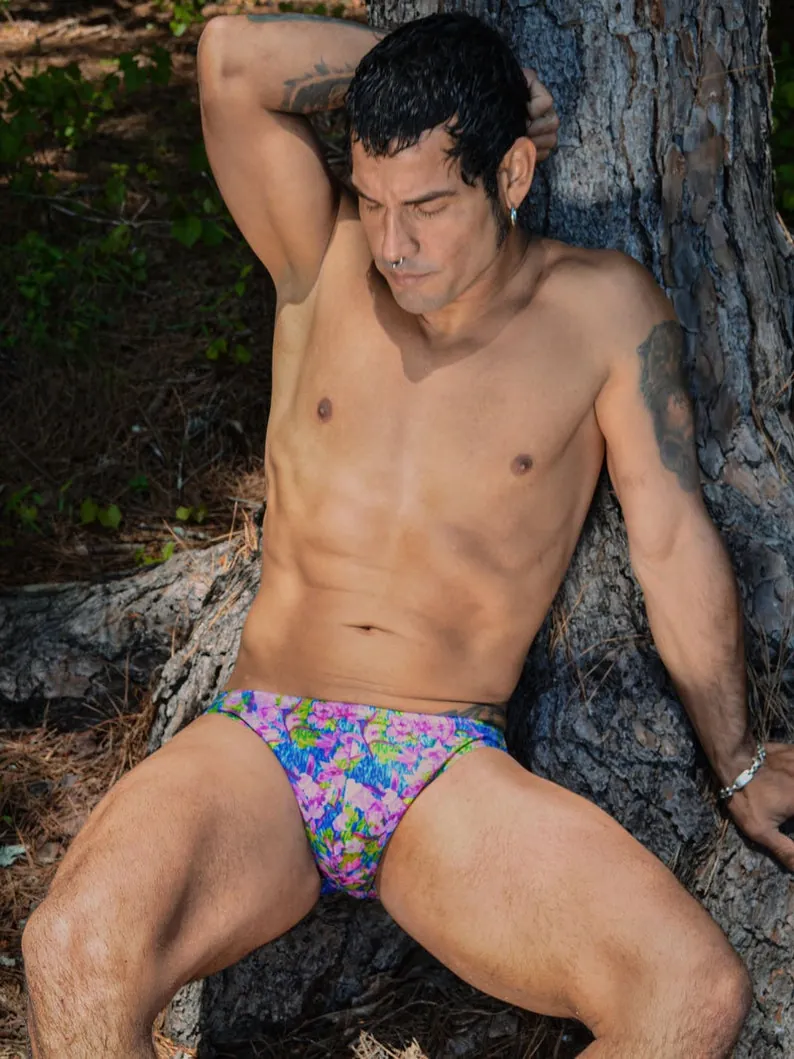
Front room should feel supported
The front of a swim brief should have enough room to sit smoothly and comfortably. It should not flatten everything into a hard line, and it should not leave loose, empty fabric that shifts when you walk. Think support, not squeeze.
There is no universal amount of room because bodies are not built to a universal template. What you can judge is the behavior of the fabric. If it pulls sharply across the front, rides upward, or makes the waistband tilt, try a different size or cut. If it collapses into folds while the waist feels right, the shape may simply not be the best match for you.
Do a practical check before you decide: sit on a chair, stand back up, and take a few steps. The front should return to a smooth, comfortable position without a major readjustment.
Check the seat when you move
Turn around, then bend and straighten once. The back should cover what you expect it to cover without pulling across the center seam or hanging away from your body. A brief that is too small often feels stretched across the seat before it even gets wet. A brief that is too big can look fine standing still but develop excess fabric as soon as you walk.
Movement matters more than a frozen mirror pose. A good suit follows you through a few ordinary motions and comes back to center. You do not need to keep tugging the sides or resetting the back every time you take a step.

Use your waist measurement, then trust the fit
A measurement is the best place to start, especially when you are ordering online. Measure around the spot where you want the waistband to sit, with the tape straight and snug but not pulled tight. Then compare that number with the maker's size guide.
For Cecil and Ezra fit help, the listed waist ranges are Small for 28-30 inches, Medium for 32-34 inches, Large for 36-38 inches, and XL for 38-42 inches. Those ranges give you a sensible starting point. Your preferred feel still matters, particularly if you sit at the edge of a range or know that you dislike a firm waistband.
Between sizes is the moment to slow down. Ask yourself which issue you would rather avoid. If the smaller size already feels demanding when dry, sizing up is usually the smarter call. If the larger size has slack at the waist before it ever sees water, stay closer to your measurement. Do not choose a larger size just to create extra fabric. A swim brief needs enough recovery to stay where it belongs.
Expect a little change in the water
A brief that feels right dry should still feel right after a quick rinse or a few minutes in the pool. It may relax a touch as the fabric gets wet, which is why a dry fit that is already loose rarely improves once you are swimming. You want a waistband and leg openings that begin secure, then settle comfortably.
Do a simple at-home test when you can. Wear the suit in the shower or rinse it in cool water, then move around for a minute. Check whether the waistband stays level, whether the front still feels supported, and whether the back has kept its shape. You are not trying to recreate a full day at the beach. You are looking for obvious movement before the return window or first vacation.
When the fabric is wet, avoid yanking the suit up by the waistband alone. Ease it into place from the sides and let the seams settle. That small habit prevents a brief from being judged in a twisted position that it was never meant to hold.
Also give it a minute after you get out. A suit can feel different once it starts to dry, especially around the waistband and legs. The right fit returns to a neat, comfortable shape instead of staying stretched, rolling at the top, or leaving you searching for the nearest cover-up. If it needs a full reset after every dip, that is useful fit information, not something you need to ignore.
Do not judge the whole suit by the number on the tag
Two briefs marked the same size can feel different because fabric, lining, elastic, and cut all change the experience. A soft stretch fabric may feel easier on the body than a firmer one. A higher leg opening may make the same waist size feel more open. Front lining and drawstrings can change the feel as well.
That is why a good made-to-order conversation beats guessing. Look at the current prints, use the size guide, and then pay attention to the notes on the listing. If you have a fit question, it is better to ask before placing the order than to force yourself into a size that is only almost right.
A quick fitting checklist
Before you head out
- The waistband sits level at your natural underwear line.
- You can bend, sit, and walk without digging or slipping.
- The leg openings lie flat without deep marks or loose gaps.
- The front feels supported and smooth, not compressed or empty.
- The back returns to place after you move.
Frequently asked questions
Should swim briefs feel tight when you first put them on?
They should feel secure, not punishing. A good brief has enough tension to stay in place when you move, but you should still be able to breathe, sit, and walk without thinking about the waistband or leg openings.
Where should the waistband sit?
Most people get the cleanest fit when the waistband sits where they naturally wear their underwear, not pulled high toward the ribs and not dropped low on the hips. The right position keeps the front and leg openings from working against each other.
Should I size up in swim briefs?
Size up when your waist measurement falls between sizes, the leg openings pinch, or the brief feels difficult to pull into its natural position. Do not size up just to create extra fabric. A brief that is too loose can lose its shape in the water.
How do I know if the front has enough room?
The front should sit smoothly and comfortably without pulling hard across the body or leaving loose folds. The goal is support with room to move, not compression for its own sake.
